This week in Montpelier, education governance reform took center stage, with Act 73 discussions evolving from high-level overviews last week to concrete proposals on district consolidation, shared services, and regional structures. This signals a shift toward mandatory regionalized service (or consolidation) to address equity and costs, though voluntary options and rural safeguards remain hotly debated. We weighed in early in the week with the letter to the House Education Committee, urging them to challenge assumptions similar to those that derailed Act 46 (the previous consolidation effort). We followed later in the week with testimony in the Senate Finance Committee about our report identifying $300 million in potential savings by consolidating Supervisory Unions (instead of districts) and taking advantage of shared services.
The House Education Committee explored Appendix E of the Redistricting Task Force report, which recommends the use of Cooperative Education Service Areas (CESAs) as a shared services model for high-cost service like special education and IT, rather than full mergers, in order to preserve local control while achieving scale. Superintendents and Task Force members highlighted potential savings of 20-66% on services like student evaluations and professional development.
Chronic absenteeism also gained coverage this week, with the Agency of Education proposing a prevention-focused statutory shift to tackle chronic absenteeism rates that are hovering around 30% statewide. Some districts have been more effective at addressing this problem, so the Agency wants to roll their solutions out statewide.
The focal point of the week, of course, was the Governor’s FY2027 budget address, which built on last week’s (mostly) stable revenue forecasts by outlining a $9.4 billion in total spending without tax hikes. He highlighted priorities such as education reform (shocking), housing, health care spending, and energy affordability amid federal uncertainties.
His budget proposal halved projected 12% education property tax increase via $105 million in one-time funds. Those funds will barely cover the hole that he and the Legislature created last year when they bought down property tax rates. This of course still leaves property taxpayers with a 6% increase for next year, but the Governor did endorse a plan introduced by Senate Leadership that would freeze school spending for two years while education reform efforts are hashed out. A combination of these two strategies could yield somewhere in the neighborhood of a 1% increase for FY2027.
The Governor also highlighted energy reforms aimed at 100% clean by 2030 with a pragmatic mix of solar, hydro, and nuclear to curb rising costs, a evolution from the Climate Action Plan’s focus on in-state renewables only (excluding larger and cheaper nearby clean generation plants). He also introduced ideas around reinsurance and competition to lower health care premiums.
It’s not often that public safety is covered in a budget address, but he included expansions of pre-trial conditions as well as increased accountability for violent youth offenders. Overall the Governor’s budget recommendations display a holistic vision that emphasizes structural fixes over one-time patches, fostering transparency and accountability.
Housing policy also saw some innovation this week with H.602. The bill would extend temporary permitting exemptions for affordable housing through 2030 and introduce a series of pre-permitted housing designs that could be either mass manufactured or built on site. This means these designs, in the right location, would bypass Act 250 review and possibly even local zoning. A program like this has the potential exponentially increase the speed of construction as well as bring down the cost. This would be a significant win in the battle to stabilize our housing market and ease property tax burdens while addressing demographic shifts and boosting affordability
Overall, the developments this week are trending in the right direction with the Administration making a number of practical recommendations to produce positive outcomes for Vermonters while ensuring our environmental and social responsibilities are met. So far the Legislature seems to be pulling in the same direction.
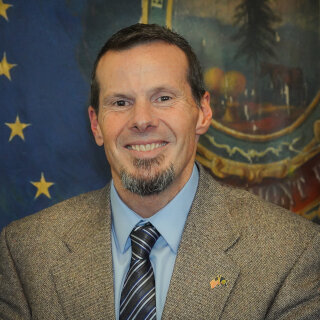
With many thanks to the author, CFV Executive Director Ben Kinsley.
https://www.campaignforvermont.org/education_reform_plan_h_494?e=c149af3f954d5ed6617079d07b99bd56